Why You're Exhausted but Can't Sleep | 3 Quick Tips
When your body is begging for sleep, but your brain apparently missed the memo.
Can we talk about bedtime for a minute?
Not the Pinterest version where the house is spotless, you've had your cup of herbal tea, your journal is full of profound thoughts, and you're peacefully asleep by 9:30pm.
I mean real-life bedtime.
The kids are finally asleep. You've cleaned up the kitchen... mostly. You remembered to switch the laundry over to the dryer. Or maybe you remembered that you forgot (laundry is my nemesis). You finally crawl into bed thinking, Finally. I made it.
And then your brain decides it's the perfect time to replay every conversation you've had this week, plan tomorrow's grocery list, remember you did not, in fact, order the new fancy underwear for your potty training child, and wonder if that weird noise your car made yesterday is something you should probably look into.
Seriously?
If you've ever laid in bed wondering, "Why am I so tired, but I can't actually fall asleep?" you're not alone. I've been there too, and so, so, so many others.

For the longest time, I thought I just wasn't a good sleeper. I figured it was another thing I needed to get better at. Sleep harder, Adriana!
Turns out, that's not really how our bodies work.
One of the things I love about Ayurveda is that it asks different questions than our culture does. Most of the wellness world wants to know what supplements you're taking, whether you're drinking enough water, or if you've tried magnesium. All of those are great questions, but Ayurveda starts somewhere else. It asks, How are you living? How are you moving through your day? What rhythms have you created? Or what bad habits can we unwind? Because those things matter more than we often realize.
In Ayurveda, sleep—or Nidra—is considered one of the three pillars of health. That caught my attention the first time I learned it because, let's be honest, everyone talks about food. We obsess over what to eat, what not to eat, which diet is trending this week, and whether coffee is ruining our lives (no comment). Sleep usually gets whatever time is left over after we've taken care of everyone else.
And that's where I think many of us get stuck.
We don't actually transition into rest anymore.
We move from work to dinner, from dinner to dishes, from dishes to emails, from emails to scrolling on our phones, and then we expect our bodies to instantly know it's bedtime. It's a little like driving 80 miles an hour, slamming on the brakes, and wondering why the car doesn't stop immediately. What do we realistically expect in this situation?
Our nervous systems need time to catch up.
One of the biggest shifts Ayurveda gave me was realizing that sleep doesn't begin when your head hits the pillow. It actually begins with how you spend your morning, afternoon, and most importantly, your evening.
If you've been making decisions all day, solving problems, carrying everyone else's needs, and staring at bright screens until the moment you turn out the light, your nervous system hasn't actually received the message that the day is over. You are continuously just telling it “BE PRODUCTIVE.”
That doesn't mean you need a two-hour bedtime routine with candles, chanting, and seventeen wellness products you found on Instagram (don’t get me started…).
I actually think we've overcomplicated wellness. Somewhere along the way, we started believing that if our routine isn't beautiful enough to post online, it probably isn't working.
Meanwhile, some of the most powerful things you can do are so incredibly ordinary.
Here are a few examples:
Turning your phone off a little earlier (at least 1 hour before bed). Instead, read a few pages of a book instead of one more scroll through social media.
Dimming the lights after dinner. This helps promote melatonin release!
Rubbing a little warm oil into your feet before bed and giving yourself a mini self-love massage. Not only does this create a grounding effect, but it feels really good too.
None of these things are flashy. They're just gentle ways of telling your body, The day is over now. You don't have to stay on high alert. Let’s start the wind down…
Just pick one small ritual and try it for the next few evenings. See how it feels.
If you're reading this and thinking, "This is me. I'm exhausted, but my brain just won't shut off," I created something for you.
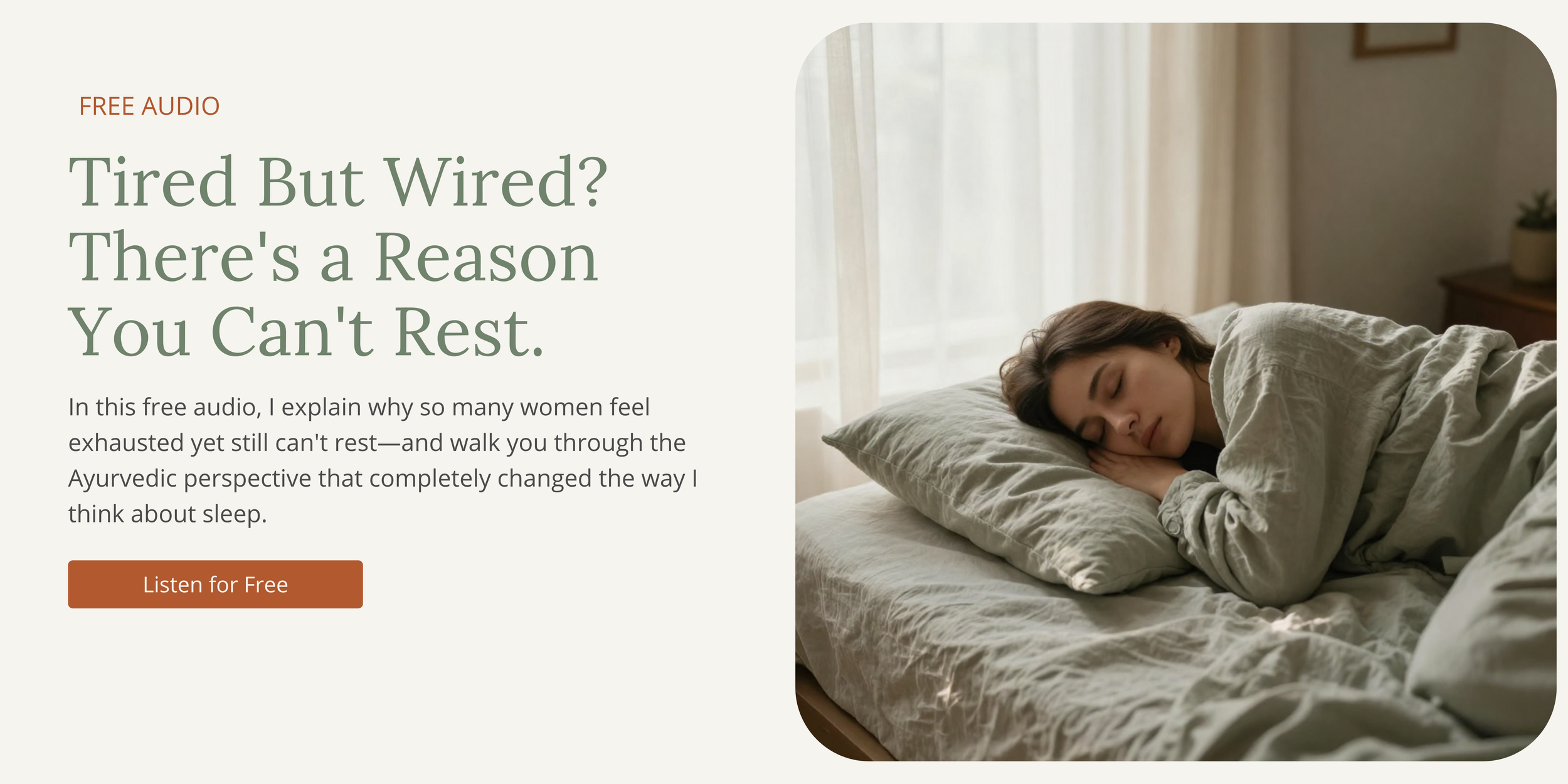
You can listen while you're driving, folding laundry, or hiding in the closet, eating chocolate (yes... true story). No judgment here.
And if, while you're listening, you find yourself thinking, "I need more than a few tips. I want this to become my new normal," I'd love to welcome you into the Rooted Mother Experience.
Because learning about these rituals is one thing. Building them into everyday life—especially in the middle of motherhood—is something entirely different. Over nine weeks, we'll work together to create sustainable rhythms that support your sleep, your nervous system, your hormones, and your well-being, one gentle step at a time.
Before you go, I'll leave you with one question.
When your head finally hits the pillow, what's the first thing your mind starts thinking about?
I'd genuinely love to know. <3